Learning from Communities: Welcoming Worku Tigist to the Department [03.09.26]
New PhD researcher Worku Tigist joins the department with a research focus on pastoral systems, social learning and community-led adaptation in Ethiopia.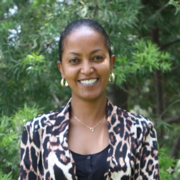
We are delighted to welcome Worku Tigist to the department as a new PhD researcher and recipient of the Germany–CGIAR Science and Impact Hub scholarship.
Worku joins the department with a strong interest in understanding how communities themselves create, share and sustain knowledge in the face of environmental and social change. Her work focuses particularly on pastoral and mixed farming systems in Ethiopia, where local adaptation practices, social learning and community-based knowledge play an important role in shaping resilience.
Having worked alongside pastoral and smallholder communities for more than 14 years, Worku brings extensive experience in participatory research, rural livelihoods and climate resilience. Her research is deeply grounded in long-term engagement with communities and an interest in understanding how locally rooted practices emerge and spread through everyday interactions, shared experiences and intergenerational learning.
At the University of Hohenheim, her PhD research explores how social norms, knowledge exchange, and learning processes influence resilience and adaptation in pastoral communities in Afar and South Omo, Ethiopia. Her work seeks to better understand why some households are able to adapt successfully to changing environmental and livelihood conditions despite facing similar challenges as others, and what can be learned from these locally grounded experiences.
Reflecting on her motivation for pursuing this research, Worku emphasizes the importance of recognizing and learning from adaptation practices that already exist within communities. Rather than focusing only on external interventions, her work highlights the value of household-led practices, local knowledge, and collaborative learning processes.
We warmly welcome Worku to the department and look forward to the perspectives, experiences, and research she will bring to our academic community.

